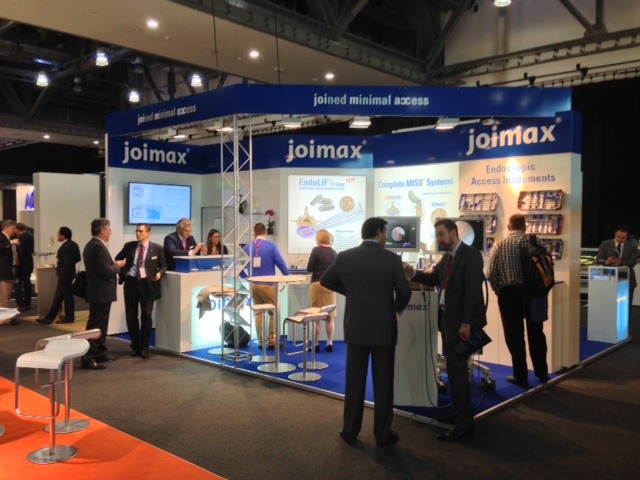
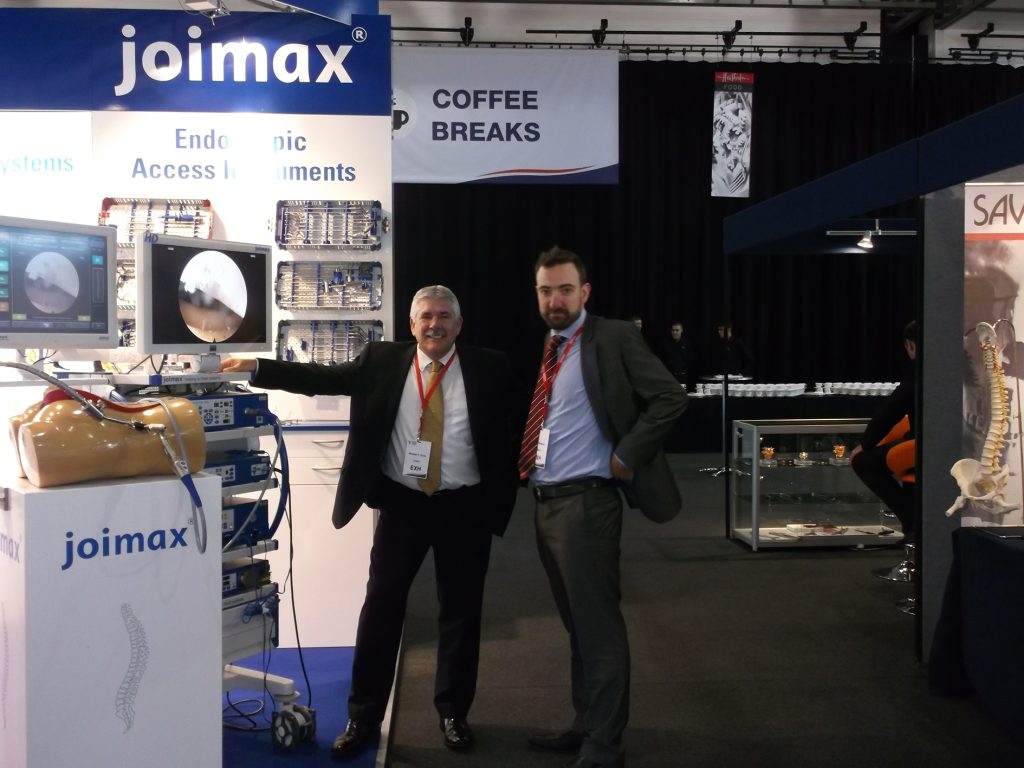
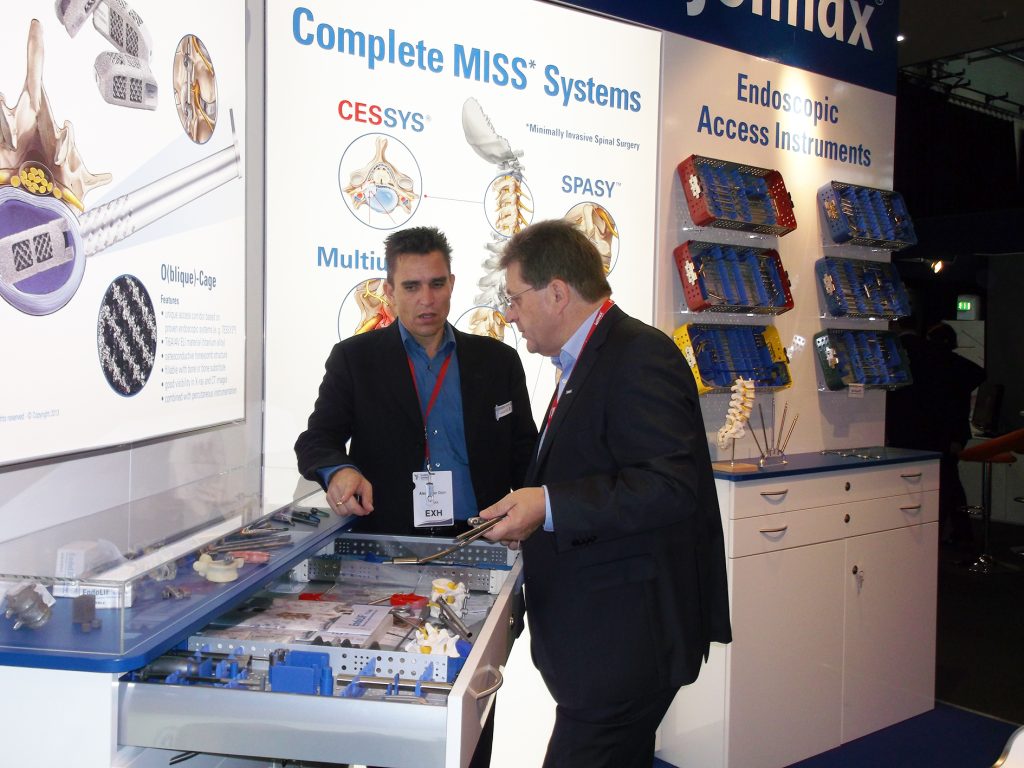
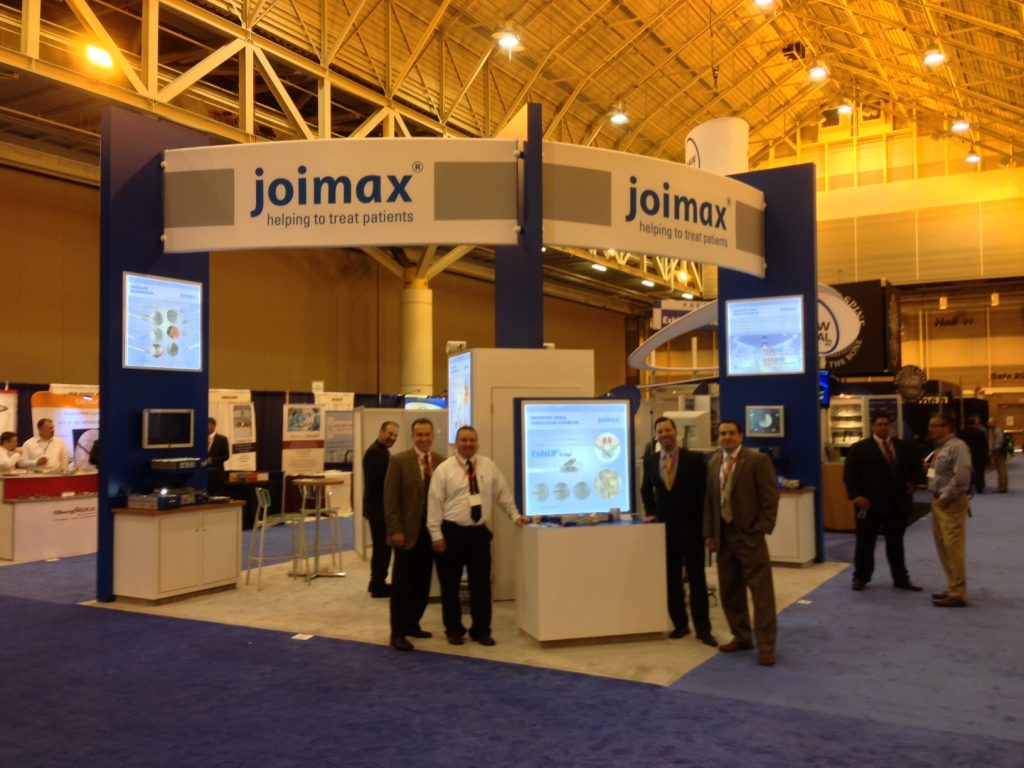
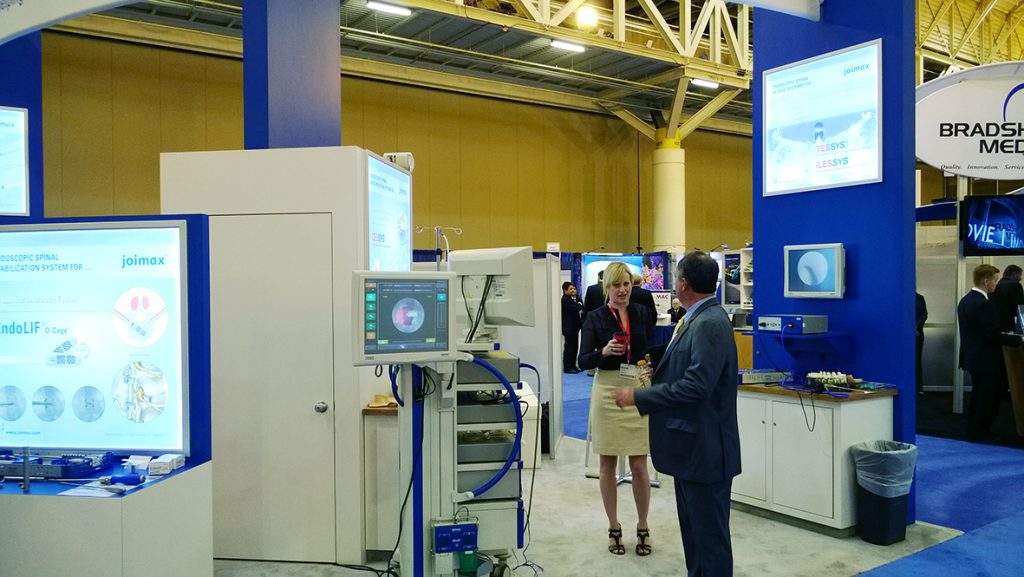
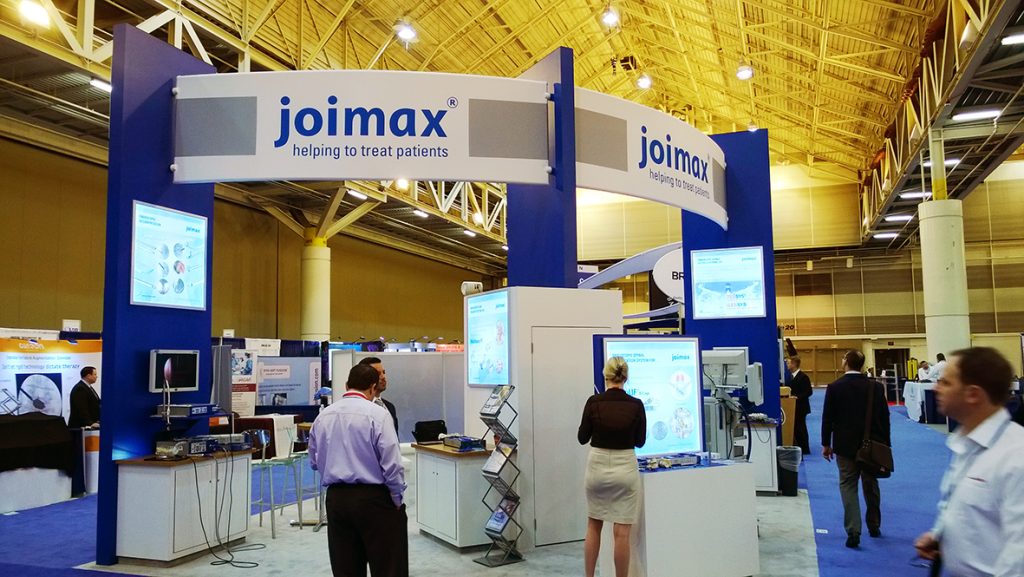
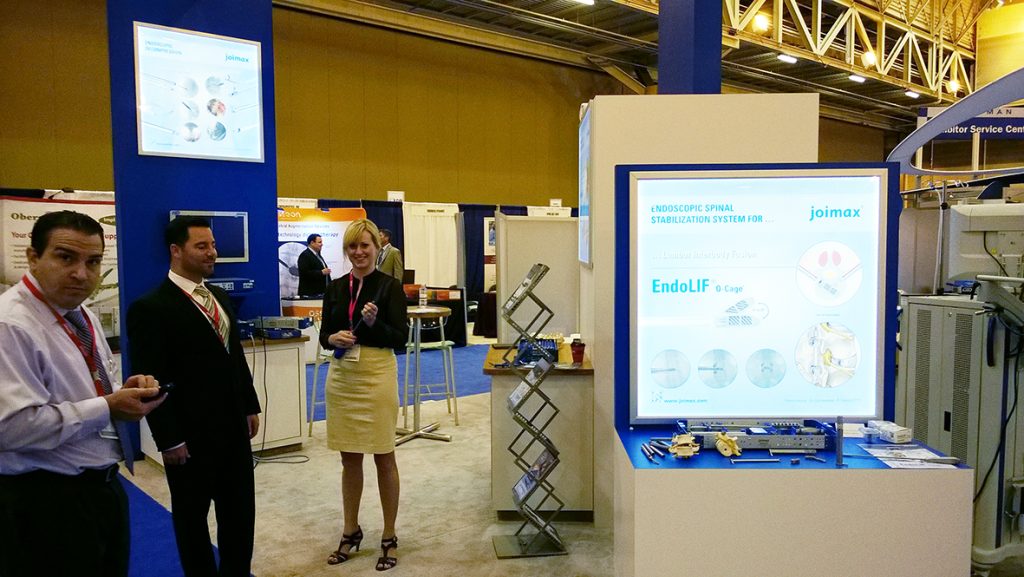
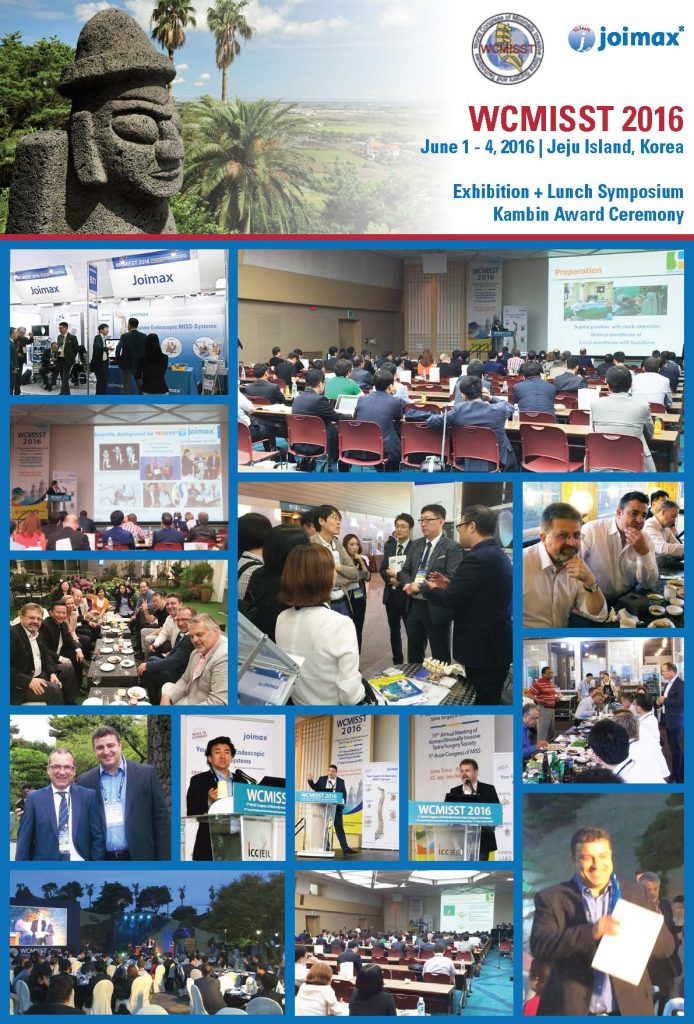
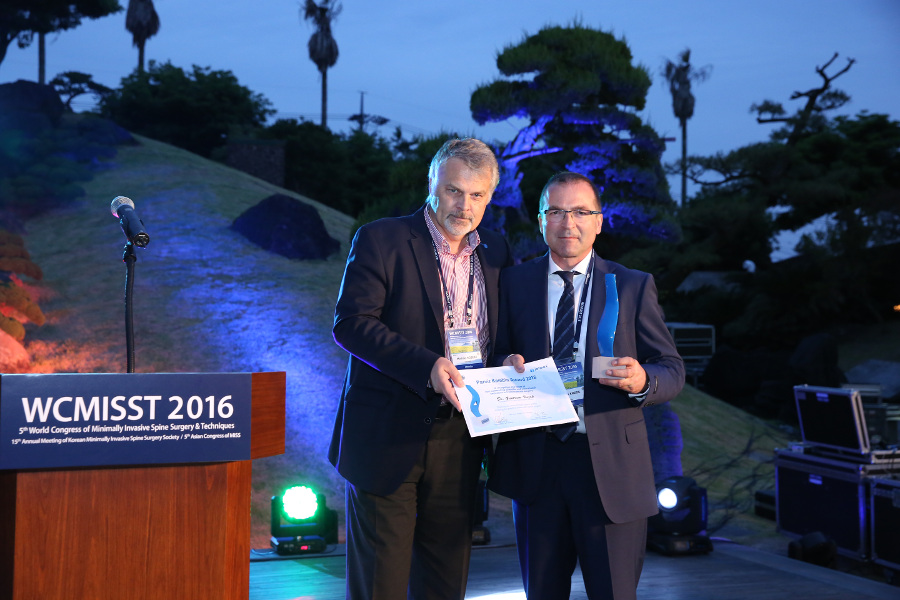
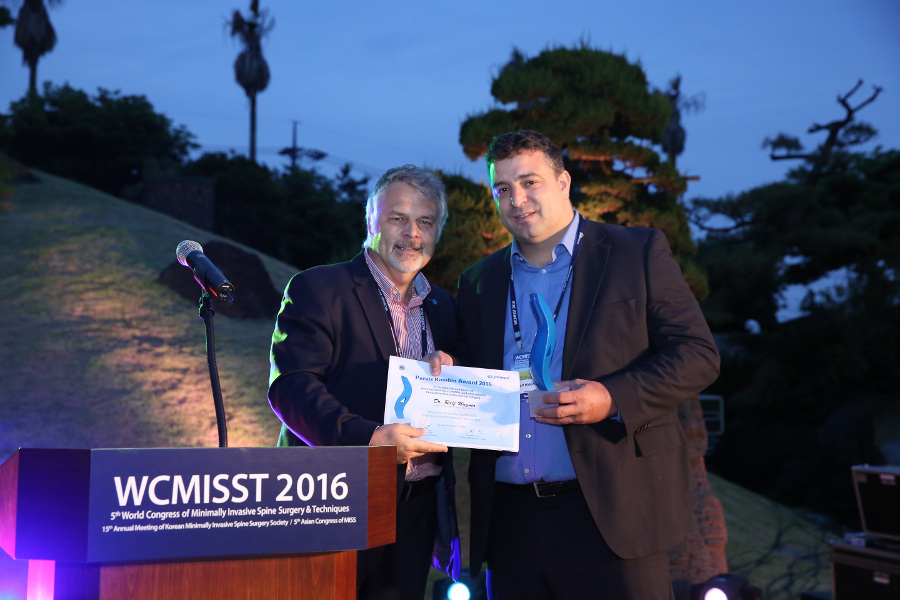
joimax® and spine experts from across the world at COMINCO in São Paulo

Karlsruhe – Spine experts from across the world met at the beginning of August at COMINCO (Brazilian Congress of Minimally Invasive Spine Surgery) in São Paulo. This was the fifth time that COMINCO has taken place and it provided an opportunity for large numbers of experts to share information and ideas in the fields of neurosurgery and orthopedics.

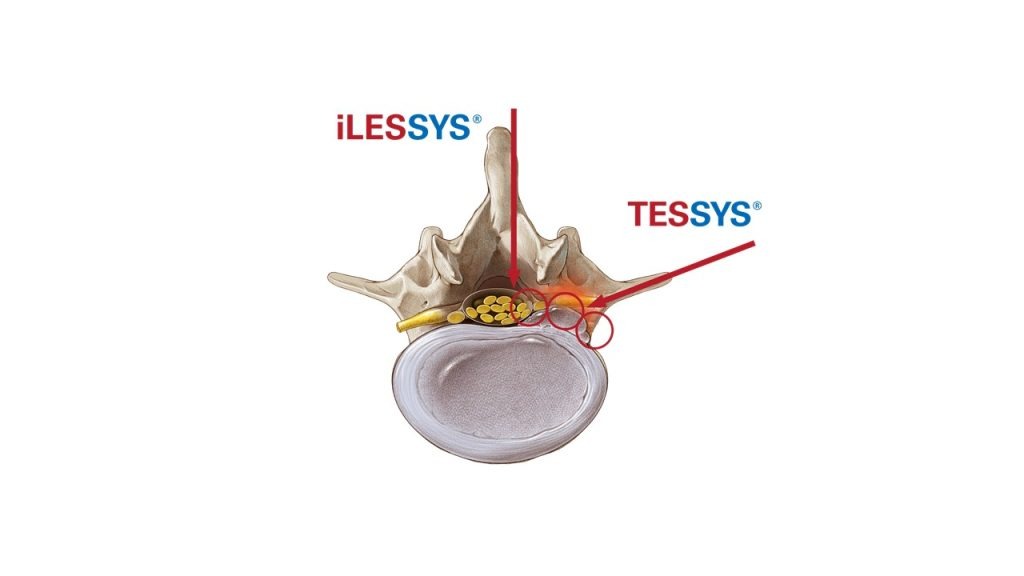
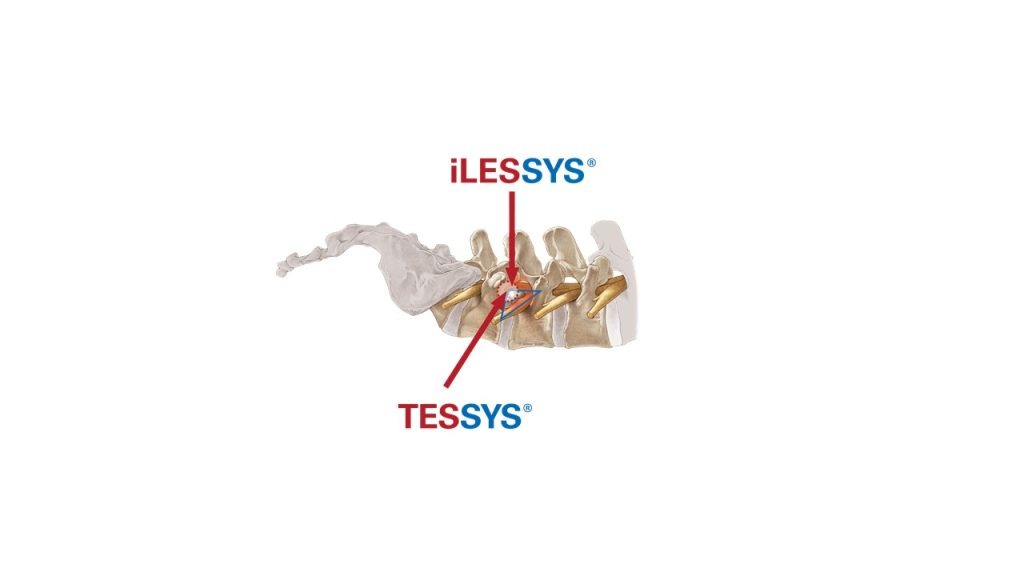
Minimally invasive treatment methods and their successes from the patient’s perspective were the focus of the congress. The very latest surgical possibilities and techniques were presented in symposia, workshops, and numerous lectures to a very high scientific standard. joimax® GmbH trainer, Dr. med. Ralf Wagner from Frankfurt, Germany, notably introduced TESSYS® in his presentation “Endoscopy of the lumbar spine in degenerative diseases.” This technique provides transforaminal access to the lumbar spine for treatment of herniated discs and stenosis – an osseous narrowing of the spinal canal.

Cominco

joimax® shows major presence at NASS 2016 with a User Meeting and Workshop at Harvard Medical School, a NASS CME Lab and an Expert Panel Forum at the exhibition booth

Irvine, CA and Karlsruhe, Germany – October 25, 2016 – joimax®, the global acting German developer and marketer of technologies and training methods for endoscopic minimally-invasive spinal surgery, will again exhibit at the annual meeting of the North American Spine Society (NASS) 2016, taking place from October 26 – 29 in Boston, USA. Prior to the convention, on Monday, October 24, joimax® will hold a User Meeting followed by a workshop at the Harvard Medical School Conference Center. On Tuesday, October 25, the NASS CME-Lab with a joimax® station will take place. During the exhibition a group of internationally respected spine experts will also give presentations in a forum at the joimax® booth.

Key topics of the joimax® User Meeting will be centered around the endoscopic treatment of degenerative spinal diseases on the basis of the joimax® portfolio products with TESSYS®, CESSYS®, iLESSYS® Delta systems as well as EndoLIF® and Percusys®. A group of spine experts will share their expertise and extensive knowledge on the treatment of spinal diseases. The meeting will be completed with a cadaver lab with 3-4 stations at the Conference Center of the Harvard Medical School to train attendees on the whole range of endoscopic minimally-invasive spine surgery applications based on the joimax® techniques.

Tuesday’s NASS CME-Lab will be chaired by Professor Michael Y. Wang, M.D. FACS, University of Miami Miller School of Medicine, Miami, Florida, another pioneering spine surgeon and joimax® faculty member, who recently published a special edition in the Journal of Neurosurgery called Neurosurgical Focus, focused on Endoscopic Spine Surgery.

Additionally, joimax® will host a “Meet the Expert Forum” with presentations at its booth given by Dr. Ralf Wagner and Dr. Erik Traupe, both from Germany, and also Dr. Menno Iprenburg from the Netherlands. Topics discussed will include the benefits of spinal endoscopic transforminal and interlaminar decompression methods over traditional ones. joimaxs’® novel treatment options for advanced indications enjoy a fast growing adoption rate of its endoscopic technologies worldwide will also be discussed.

“In the context of the annual NASS meetings’ we aim to share the latest information, innovative techniques and best practices with renowned spine care professionals from around the world. These joimax® activities will satisfy the requirements of spine specialists to take advantage of the latest innovations and technologies in endoscopic minimally-invasive spine surgery,” says Wolfgang Ries, CEO and founder of joimax®.

“With our existing product range as well as with our newly launched products – the MultiZYTE® SI endoscopic sacroiliac joint therapy set, MultiZYTE® RT for endoscopic minimally-invasive treatment of the facet joint and the new Intracs® Intraoperative Navigation Tracking & Control System, joimax® uniquely enhances its endoscopic minimally-invasive product portfolio to fully meet users’ needs,” he continues.

joimax® goes BRIC and beyond

OLYMPUS DIGITAL CAMERA

Right on time with the soon expected registrations of the joimax® products in Brazil – one of the most emerging BRIC economies – the German-based company showed a very successful presence at the third World Congress of Minimally Invasive Spine Surgery and Techniques (WCMISST) in Salvador de Bahia. The congress was supported by the main International MISS Societies. Almost 2.000 interested participants attended the congress which focused especially on promoting and enhancing the interventional minimally invasive treatment of spine diseases. joimax® is very proud of being part of this exciting development.

The eight largest emerging and developing economies by either nominal GDP or PPP are the BRIC nations (Brazil, Russia, India and China) as well as Mexico, Turkey, Indonesia, and South Korea. joimax® is represented in more than 60% of these countries – namely China, Russia, India, South Korea, and Turkey – and observes a fast growing number of registered products in these areas. In Brazil and Mexico submissions with the Health Authorities were started several months ago. The completion is expected in the near future. Then nearly 90% of the growth-leading economies will be covered.

joimax® provides the complete range of high-quality medical devices for minimally invasive endoscopic spine surgery “Made in Germany”. As a matter of course these devices are CE-marked and FDA-cleared and are sold throughout the European Union and the United States. The specific surgery methods they are used for, were developed by joimax® together with international experts and opinion leaders for the benefit of the patients:

Less pain, less trauma, less hospitalization, gain back quality of life and be back to work in shorter time!

The advantages are evident. Therefore joimax® has established a worldwide net of distribution partners allowing that as many patients as possible can get access to these progressive therapy methods.

Other important countries where joimax® is already present are: South Africa, Israel and Australia. One of the company’s goals within the next few years is to achieve the approval for its devices with the Japanese Ministry of Health.

Emerging and growth-leading economies are the key markets that are expected to lead global growth in the next 10 years. “joimax® is most pleased with its growing market penetration also in these countries, hence promoting these gentle, patient-friendly and economically beneficial surgery methods for the sake of the patients and of the health insurance systems at the same time”, states Wolfgang Ries, CEO and Founder of joimax®.

joimax® Celebrates 20th Anniversary, Expands Education Program

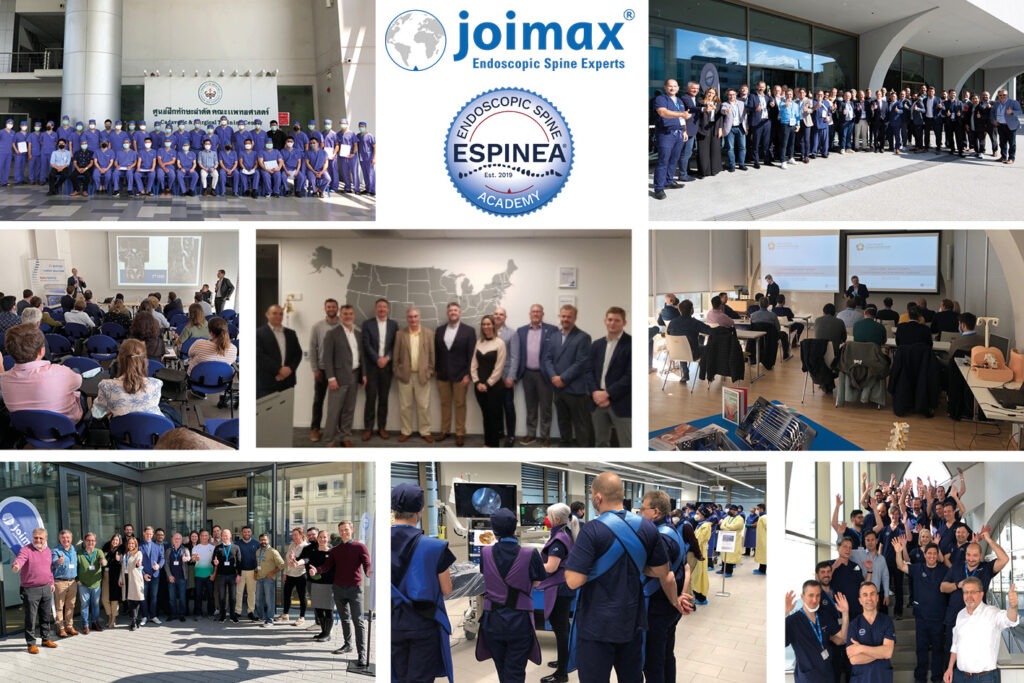
Karlsruhe (GER) — Founded 2001 in Germany, joimax®, the leading manufacturer of medical devices for endoscopic minimally invasive spine surgery, celebrates its 20th anniversary this year. In tandem with this milestone, the company expanded their educational program, ESPINEA®, furthering their global reach.

Despite COVID-19, ESPINEA® (Endoscopic Spine Academy) training programs, which are held in cooperation with the Royal College of Surgeons Edinburgh (RCSEd) and joimax®, were conducted all over the world in 2020, and continue to roll out in 2021. Due to travel restrictions, the programs were adapted to webinars, and remote support and training, totaling 60 sessions last year. By pivoting to online learning, approximately 3000 surgeons were reached in 2020, and 700 surgeons so far in 2021. ESPINEA® was founded by joimax® CEO and Founder Wolfgang Ries in 2019, and was accredited by the RCSEd last year. 

“Our goal is to be globally present online, as well as to provide direct local support,” says Ries. “Regardless of lockdowns in many countries, under the ESPINEA® platform, more than 120 surgeons were trained in onsite workshops this quarter, with 70 in the USA and Mexico, 35 in Europe, 15 in Asia, and many more through the joimax® CME-program partnership in China.

ESPINEA® Board Member Alastair Gibson, FRCSEd states: “These efforts demonstrate that joimax® and ESPINEA® can achieve anything together. I’m proud to be part of this impressive blend of online, on-site, and remote events, enabling a strong ESPINEA® community.”

To support the roll out, additional Coronavirus-compliant labs were integrated into the local, onsite education programs. In addition to the company’s existing labs in Karlsruhe and Irvine, California, more labs throughout the USA, including Houston, Minneapolis, New York City, Dallas, and Indianapolis, as well as the Surgical Skills Lab in Mexico City and ORSI Academy in Melle, Belgium, have been added.  Also, joimax® opened a branch office in Singapore; the Hong Kong office was opened in spring 2019.

“It is becoming increasingly important to have a personal, on-site presence in order to teach globally-valid learning content,” adds Ries. 

joimax launches the iLESSYS® Delta system for treatment of spinal stenosis at DGNC 2015 annual meeting

Karlsruhe, Germany – June 8, 2015 (BUSINESS WIRE) – The German company joimax®, developer of technologies and training methods for minimally invasive endoscopic spinal surgery, today announced it will introduce the company’s new iLESSYS® Delta system to the market at the 66th Annual Meeting of the German Society of Neurosurgery (DGNC) taking place in Karlsruhe, Germany from June 7-10.

iLESSYS® Delta, an advanced development of the joimax iLESSYS® technology, is suitable for dorsal and dorso lateral treatment of central spinal canal stenosis. The iLESSYS® Delta system enables a large area to be decompressed by means of the interlaminar access, guided by endoscopic-assisted vision.

“Since the access to the spine is the same as with the already well-established iLESSYS® technique, usage is very straightforward.” said Dr. Guntram Krzok, orthopedic surgeon from Waltershausen, Germany after testing the new system at a joimax workshop early this year. “I was impressed by the new scope which delivers outstanding image quality. With the specialized instrument set, it is finally possible to achieve decompression of central spinal canal stenosis.”

The iLESSYS® Delta instrument set includes specially developed tools that enable extensive, yet gentle, tissue-sparing decompression. The 6 mm working channel of the new endoscope allows for the use of large shaver blades designed for bone resection and endo-kerrisons. An additional option is the plastic (PPSU) working tube for unimpaired X-ray examination.

“iLESSYS® Delta is a logical addition to our portfolio. Not only is the system suitable for endoscopic decompression, but it also allows the parallel implantation of cages. This way we can achieve dorsal decompression and stabilization in one step,” comments Wolfgang Ries, CEO and founder of joimax.

About joimax

Founded in Karlsruhe, Germany, in 2001, joimax® is one of the leading medical device companies in minimally invasive spinal surgery („joined minimal access“). The company’s U.S. subsidiary was established in Irvine, California, in 2005. The company is primarily focused on the development, production and marketing of technologies and methods for minimally invasive endoscopic spinal surgery. joimax is active in 40 countries around the globe and its methods have been successfully employed in approximately 130,000 surgeries. With a special focus on education, the company provides surgeons with specialized technique training through the three-step joimax CM3 education program. This program includes visitations, cadaver workshops and live-surgery support.

joimax® conducts an international Live Spinal Surgery Workshop in cooperation with the Medical University of Graz, Austria

Spine specialists take part at the joimax® endoscopy workshop with live spinal surgeries

Karlsruhe, 14 March 2011: On 17 and 18 March 2011, the Medical University as well as the Institute for Anatomy in Graz, Austria, were the sites of a two-day international joimax® Workshop focused on the endoscopic resection of herniated discs utilizing the TESSYS® method. The first day, Dr. Wolfgang Kreil and Univ. Doz. Dr. med. Sandro Eustacchio of the Medical University Graz will operate on two patients with herniated discs using the TESSYS® method. The participating orthopaedic surgeons and neurosurgeons from Germany, Austria, Greece, Bulgary, Italy and Macedonia will experience the surgery procedure firsthand. While operating on the patients, one of the operating surgeons will explain each step of the TESSYS® surgery and answer questions of the workshop attendees. Afterwards Dr. Wolfgang Kreil and Dr. Sandro Eustacchio will lead scientific presentations and panel discussions on how the transforaminal endoscopic technique works and what their experiences have been, while discussing several case examples.

On the second day, joimax® hosts an intensive cadaver training course at the Institute for Anatomy Graz. The practical training and hands-on learning experience gained at cadaver workshops such as this one is an important first step in the three-step joimax® CM3 Education Program. In this comprehensive program, experienced surgeons and application specialists train each workshop member to use the TESSYS® Method. The subsequent steps of the Education Program are visitations, followed by live surgeries accompanied by joimax® Medical Trainers and application specialists.

joimax® starts the official sale of its EndoLIF® Delta and DoubleWedge cages. All three members of EndoLIF® family CE approved.

Karlsruhe, GER– July 15, 2019 –joimax®, the Germany-based market leader of technologies and training methods for full-endoscopic minimally-invasive spinal surgery, announces the official sales launch of its complete EndoLIF® family. EndoLIF® is an instrument set for endoscopic-assisted minimally invasive lumbar interbody fusion. As already announced and showcased at earlier events, the EndoLIF® product line consists of three members now: the well-known EndoLIF® O/On-Cage, the EndoLIF® Delta Cage, and the latest EndoLIF® Double Wedge Cage. The complete EndoLIF® product family is now CE-approved and fully available. Moreover, the EndoLIF® O/On-Cage is FDA-approved.

All EndoLIF® Implants are manufactured using a 3D printing process, which ensures an open diamond cell structure. The cages are safely implanted via the guide wire and are fillable with bone or bone substitute material. With their rough and porous surface, the implants guarantee optimal bone ingrowth, stability and finally fusion.

The EndoLIF® Cage family provides the right implant for every patient and is the perfect solution for endoscopic spinal fusion. With the gentle and atraumatic access via gradual tissue dilatation, muscles remain intact leaving important biomechanical structures in place after surgery.

Like with any endoscopic procedure compared to open surgery, all advantages for fusion are now given with the EndoLIF® program also. With one EndoLIF® Instrument Set all three cages of the EndoLIF® family can be implemented.

Dr. Florian Zentz, (Munich, GER) emphasizes “the extraordinarily high primary stability of the EndoLIF® DoubleWedge-Cage”. He continues enthusiastically: “After insertion the cage sits very firmly in the intervertebral disc space and adjusts the angulation up to 18 degrees, almost directly enabling an optimal lordosis correction.”

Dr. Ralf Wagner, (Frankfurt, GER) is also convinced of the obvious advantages: “The Delta Cage is ideal for the posterior lumbar interbody fusion (PLIF) offering a gentle posterior alternative, especially at level L5-S1 with its large interlaminar window.

A prime example of collaboration between China and Germany

Karlsruhe – joimax® opens the 3rd Training and Reference Center in Shanghai, China, at Changzheng Hospital, Tongji University, under the direction of Prof. Ye Xiaojian. The prestigious university and its affiliated Tung-Chee Hospital were founded in 1907 by the German government as its first major project in foreign cultural policy.

It is a prime example of Sino-German collaboration, which continues to this day at Tongji University and also at other centers in Chongqing at Xinqiao Hospital under the direction of Prof. Zhou Yue, and in Beijing at the General Hospital of the People’s Liberation Army (PLAGH) under the direction of Prof. Zhang Xifeng. The Training & Reference Centers provide targeted training to surgeons in endoscopic treatment methods on the spine as part of the joimax® Education Program. Above all, this features TESSYS®, the technique of transforaminal access to the lumbar spine for treatment of herniated discs and stenosis – an osseous narrowing of the spinal canal. Qualified and standardized training in these surgical techniques is essential. joimax® is therefore supporting the basic principle that patients should always receive high quality, reliable, and safe therapy in line with the very latest technology and scientific progress.

Zusammenarbeit_China_EN

Eurospine 2016: joimax® launches its new MultiZYTE® SI-Joint Endoscopic Therapy Set and its new Intracs® Intraoperative Navigation Tracking & Control System

Karlsruhe – October 05, 2016 – joimax®, the global acting German developer and marketer of technologies and training methods for endoscopic minimally invasive spinal surgery, will again exhibit at Eurospine 2016 taking place from October 5 – 7 in Berlin. During the conference, joimax®will launch two new products – the MultiZYTE® SI Endoscopic Sacroiliac Joint Therapy Set and its new Intracs® Intraoperative Navigation Tracking & Control System.

MultiZYTE® SI Endoscopic Sacroiliac Joint Therapy is developed for the treatment of the Sacroiliac Joint Syndrome (SIJS), which has been rediscovered as a major back pain generator in recent years. This kind of pain is commonly felt in the lower back, the gluteal region, the hip and thigh and can even radiate into the leg and foot. Until the 1930s, SI-Joint was the main reason for low back pain, but since 1934 the focus has been on disc herniation. According to recent studies 15 to 25% of all low back pain is caused by the SI-Joint and up to 43% in patients having undergone lumbosacral fusion. MultiZYTE® SI joimax® now offers a well developed and lasting treatment option for this disease.

The Intracs® Intraoperative Navigation Tracking & Control System was developed in cooperation between joimax® GmbH Karlsruhe and fiagon GmbH in Berlin, both located in Germany. With the Intracs® system, joimax® instruments can be navigated directly at the tip using Fiagons “chip at the tip” technology which allows tracking of instruments with a diameter in the 1mm range. The Intracs ® Navigation and Monitor Unit is integrated in the joimax® Endoscopic Tower and all necessary tools are tailored for the TESSYS® (transforaminal) and iLESSYS® (interlaminar) procedures as well as for minimally invasive stabilization procedures, like EndoLIF® and Percusys®. The main features of the Intracs® system are needle navigation through Vector-Tip-Target processing tools, the merging of 2D X-Rays with 3D- images of a patient’s CT or MRI scans, and the constant orientation control of any endoscope used in joimax procedures.

“With these two new developments we are in the position to enhance our endoscopic minimally-invasive product portfolio, driving adoption rates to meet new heights. With the world unique Intracs® system, navigation is now faster, safer and more accurate than ever before using an electromagnetic (EM) field. Radiation exposure for both, patients and surgeons will be significantly reduced,” says Wolfgang Ries, CEO and founder of joimax®. “Additionally the learning curve for all spinal endoscopic procedures offered by joimax® will now be significantly reduced and the rapid expansion of all these techniques is now well layed-out,” he continues.

The Spine Movement – May 2012

Choll Kim, MD, PhD gives a breakdown of some of the most exciting presentations in MIS at ISASS12, and looks ahead to ISASS13 in Vancouver.

Minimally Invasive Surgery Was Huge at ISASS12

ISASS12 in Barcelona was a remarkable venue for numerous presentations related to minimally invasive spine surgery. Great interest both in the US and abroad continues to grow in this area of spine surgery: MIS made up the content for one-third of all the general sessions, with a sprinkling of individual presentations in other general sessions.

The range and complexity of the MIS topics proved broad. One of the most striking findings emerging in the literature is the marked decrease in infections when minimally invasive surgery is performed. Pfandistiener et al. from the Clinic for Spine Surgery with Scoliosis Center in Germany reported on infection rates between open and MIS posterior instrumentation. In 284 open surgeries, deep infections were seen in 2.46%. In contrast, 199 patients underwent percutaneous posterior instrumentation procedures without a single infection.

The use of minimally invasive strategies to treat ever more complex conditions were highlighted. Phillips and co-workers presented the prospective, multi-center results of 107 adult degenerative scoliosis with 24 month follow-up. Excellent clinical results and a low complications were encountered in this this challenging group of patients with advanced age and co-morbidities. Anand showed similar results in 33 patients from a single site.

The fusion rates of minimally invasive interbody fusion remains high. As shown in a meta-analysis by Gwinn et al. from Walter Reed Medical Center, the MIS TLIF technique enjoys a greater than 95% fusion rate.

Topics in endoscopic surgery continue to generate interest, as well–Nagahama et al. (Hokkaido University) and Schubert (Munich, Germany) showed continued success of this promising procedure in the hands of experienced endoscopic spinal surgeons.

Lingering questions regarding MIS were also addressed: Lee et al. (University of California, San Diego) quantitatively examined hip flexion strength after the popular transpsoas lateral lumbar interbody fusion (XLIF/DLIF/LLIF). As experienced by many surgeons, hip flexion strength decreased in most patients immediately postoperation, but returned to baseline within 2 weeks of surgery.

Cost effectiveness of open versus MIS TLIF was assessed by Phillips et al. on worker’s compensation patients; the cost of overall inpatient care was slightly less for MIS than for open.

Pimenta et al. advised appropriate caution when he described low fusion success rates of 2-level AxiaLIF procedures. In their review of 27 patients undergoing L4-S1 2-level AxiaLIF, only 22% of patients were considered to have solid fusion at 2 year follow-up.

Emerging MIS technologies were presented by a wide variety of groups. Regev et al. from Tel Aviv Sourasky Medical Center described the minimally invasive transforaminal, thoracic microscopic discectomy; Husain et al. from Loma Linda University described a percutaneous cervical transfacet fixation technique; Araghi et al. showed the results of the first 40 Guyer Lumbar Interbody Fusion (GLIF) procedures; MacMillan described a novel all transosseous approach to the L5-S1 disc, and both Julien (West Virginia University) and Sharma et al. (Manassas, VA) described the use of percutaneous stabilization for thoracolumbar fractures. It is heartening to see so many attempts to make the best of minimally invasive technology in this still pioneering area of spine surgery.

Santos et al. (University of Minnesota) showed that 3-D navigation may be used to improve safety and accuracy of percutaneous pedicle screw placement. Finally, the potential changes in healthcare delivery were highlighted by Smith and Christian (Las Vegas, NV) when they showed that selected MIS fusions may be performed in the ambulatory setting.

The diversity of topics was matched only by the excitement surrounding them. I’m looking forward to even more fascinating research by my colleagues at ISASS13 in Vancouver.

Choll Kim, MD, PhD
Spine Institute of San Diego