Vertebral Compression Fractures
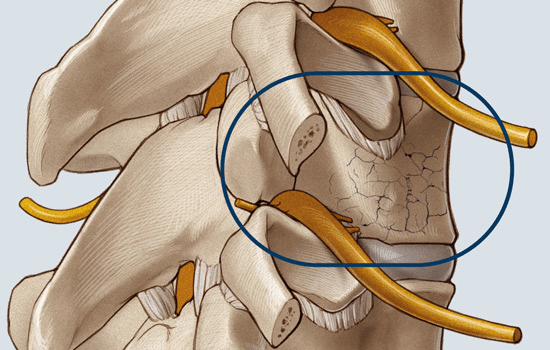
A vertebral compression fracture is a special form of a vertebral fracture. The bone of the vertebral body collapses by compression. The vertebral body, thus, shrinks down in height. Vertebral compression fractures are relatively common with certain risk factors.
Causes of Vertebral Compression Fractures
Most vertebral compression fractures occur when the bone structure is not stable enough to withstand everyday stresses. Such is the case with generalized bone diseases like osteoporosis or metastatic malignant tumors within the vertebral bodies.
Osteoporosis often occurs in women after menopause, but other risk factors can also lead to weakening of the bone: smoking, excessive alcohol consumption, radiation therapy of the spine, long-term treatment with cortisone or end-stage liver and renal disease. Once the bones are so ” brittle “, a very small ” event ” can cause for a collapsing of the vertebral body.

Vertebral Compression Fractures Symptoms
Acute vertebral body compression fractures can lead to very severe back pain with a sudden onset.
Vertebral Compression Fractures Treatment
The treatment options for vertebral compression fractures used to be very limited and in many cases not very effective: the administration of strong painkillers, wearing of a brace and bed rest.
For several years now, new and effective minimally invasive procedures (e.g. balloon kyphoplasty) for the treatment of vertebral compression fractures have been available. The collapsed vertebral body is re-augmented and then stabilized with artificial bone substitute. This new method offers rapid pain relief and allows a fast return to normal daily activities.