joimax® at the WCMISST congress in Paris

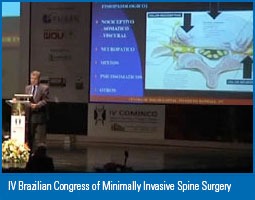
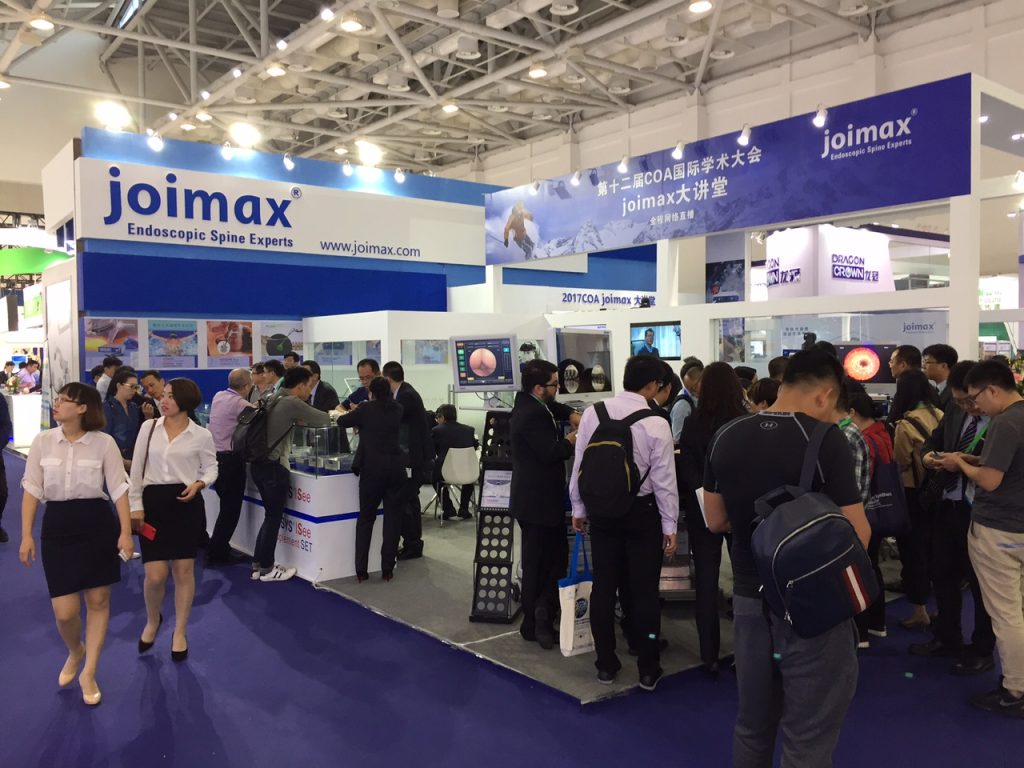
joimax® at the WCMISST Congress in Paris Karlsruhe – joimax® presented the EndoLIF® system as the latest development for endoscopic stabilization of the lumbar spine at the 4th Congress. The EndoLIF® system includes an O-cage (oblique cage) in addition to fully endoscopic access technology to the intervertebral disc space with the proven TESSYS® or iLESSYS® technique. In addition there is Percusys®, a screw and rod system for posterior percutaneous stabilization.

The WCMISST (World Congress of Minimally Invasive Spine Surgery and Techniques) is one of the leading international congresses for minimally invasive techniques in spine surgery. The Congress brings together spinal surgeons and pioneers from over 65 countries.

About joimax® joimax® Inc. from Karlsruhe, Germany, is one of the leading medical technology companies for minimally invasive spine surgery (joined minimal access). It focuses particularly on the development, production, and marketing of technologies and techniques for endoscopic spine surgery. joimax® complete systems offer the best possible all-in-one visualization, tissue removal (if required), stabilization, and documentation to enable the surgeon to work flexibly, independently, and efficiently. A three-stage joimax® CM3 Education Program trains surgeons in how to apply the surgical techniques in a targeted manner. In addition to training visits and compound workshops, the program also includes support from experienced medical trainers or application specialists during operations. joimax®, TES®, TESSYS®, iLESSYS®, CESSYS®, intENTS®, EndoLIF®, Percusys®, Vitegra®, Camsource®, Shrill®, Versicon®, Endovapor®, Vaporflex®, Legato®, Kyverment®, Tigrip®, Intracs®, and SPOT® are registered trademarks of joimax® GmbH.

Collage_WC_MISST_Paris_2014_med

joimax® , Inc. opens its first Education & Training Center in Irvine, California, posts record sales in the US and continues to make gains with endoscopic reimbursement

IRVINE, CA – August, 31, 2017– joimax® announces the grand opening of its new state-of-the-art Training and Education Center in Irvine, California. The company will be holding its first workshop at the Center on September 8-9th.

As the market leader in endoscopic spine surgery, joimax® is fully dedicated to outstanding physician education, training and services worldwide. Due to the newly released US CPT reimbursement code, valid since January 1st, 2017, the demand for joimax® endoscopic procedures are growing monthly in the USA among patients as well as the physician community. This fast growing demand creates major needs which joimax®, Inc. is addressing with fast expansion of its US organization.

“This new wet lab facility provides a major base for supporting our fast growing education needs for both our new sales and clinical associates, but moreover it’s a place for physicians to be trained,” states Bob Wolownik, National Director of Sales for joimax® Inc.

joimax® Inc. Training and Education Center

joimax® also announced that they are taking the lead in supporting this years’ workshops and educational sessions at:

SMISS Sept 14-16, 2017 – Las Vegas, NV – Sole Supporter of the Endoscopic Lab Session

ISASS Sept 22-23, 2017 – Long Beach, CA – Endoscopic Lab Supporter

NASS Oct. 25-28, 2017 – Orlando, FL – Endoscopic Spine Surgery Session Sponsor and Endoscopic Lab Supporter

joimax®  has also made significant strides in reimbursement support for endoscopic spine procedures via a new external coding support hotline that it manages along with a payor correspondence package. joimax® Inc.’s Vice President of Operations & Reimbursement, Brian Schneider, recently stated “We have seen a significant rise in interest from both payors and physicians asking to receive information and streamline communication regarding the new endoscopic spine code.”

“As we received a first CPT reimbursement code for endoscopic spine surgery earlier this year and now invest wisely for future growth, joimax® will continue to write a major success story in the US, similar to what it has accomplished in Europe and Asia, “ states Maximilian Ries, General Manager for joimax®, Inc. He announced that the company is continuing to post record sales by nearly doubling its year to date US revenues, which is in line with the companies’ budget plan.

Overall joimax® is very pleased with the great strides achieved in the US market and sees continued sustainable growth globally. “All this is an important step towards the full acceptance of endoscopic minimally invasive spine surgery techniques and their benefits to both the physician and their patients in the US now as well,” echoes Wolfgang Ries, Founder and CEO of joimax®.

The company’s European and Asian sales also show record numbers. Earlier this year, joimax® also received multiple new product registrations in Asia and recently in Brazil to fully access this new market.

joimax®announces major spike in attendance at its ESPINEA® workshops, reports record revenues

Karlsruhe (GER) — German-based joimax®, the market leader in technologies and training methods for full-endoscopic and minimally invasive spinal surgery, is excited to announce a major spike in attendance at its Endoscopic Spine Academy (ESPINEA®) workshops, which contributes to sustainable growth after another year of record revenues in 2021.

The growing interest can be attributed to increased coverage in literature and publications as cited on PubMed®. Moreover, the joimax® initiated workshop program, now under the umbrella of ESPINEA®, offers optimal training for a variety of applications and procedures, making it attractive to a broader audience.

joimax® established ESPINEA® three years ago. In Fall 2020, the Endoscopic Spine Academy was accredited by the Royal College of Surgeons Edinburgh (RCSEd). It is one of only four Accreditation Centers that meet its strict rigorous internal quality assurance processes. Together, with its growing team of faculty, joimax® developed the complete six-step curriculum to bridge the learning curve for spine surgeons. The curriculum, which was approved by the RCSEd, is developed as an educational program from beginners to masters alike.

J.N. Alastair Gibson DSc MD FRCSEd, a RCSEd and ESPINEA® Advisory Board Member sums it up: “The ESPINEA® mission is to serve endoscopic spine surgeons by providing a growing global network for lifelong learning to best benefit the patient. Our vision is to be the world’s leading interdisciplinary community in endoscopic spine surgery.”

In addition to holding ESPINEA® courses at the joimax®-owned premises in Karlsruhe (Germany) and Irvine (USA), they are also held at ORSI Academy (Belgium) and at other prestigious universities, such as Paracelsus Medical University Salzburg (Austria). Recently, ESPINEA® was rolled out in Thailand. Prior to the July PASMISS Meeting, the courses will be launched in Singapore for the APAC region, and following the October SMISS Meeting, launched widely in the U.S.

“Given the ongoing development of endoscopic spine surgery with more and more technological options, the benefits for the patients, along with the substantial publication, I am convinced that endoscopic spine surgery is now the gold standard,” states Iprenburg Spine Clinic Founder and ESPINEA® Advisory Board Member Dr. Menno Iprenburg.

With the ESPINEA® courses, surgeons can train on different procedures using the joimax® TESSYS®, iLESSYS®, CESSYS®, MultiZYTE®, EndoLIF®, Percusys® based on the latest NAVENTO® tower. Most of the courses are conducted in a hybrid mode — online and on-site presentations and lectures combined with in-person hands-on training using models, simulators and anatomical specimens.

ESPINEA® was established as an open education platform for other players in the field of spinal surgery as well. Therefore, further supporters have already joined and new entrants are welcomed.

Champions of Health Interview with
Mr. Wolfgang Ries – CEO and Founder of joimax®

Champions of Health: Spotlight On Leaders Shaping Germany’s Healthcare

We are delighted to inform that an interview with the CEO and Founder of joimax®, Mr. Wolfgang Ries, has been published in the Champions of Health magazine.

The Interview

In this insightful interview, Mr. Ries shares the inspiring story behind the founding of joimax® and provides an in-depth look at our cutting-edge products and innovations that are shaping the future of minimally invasive endoscopic spine surgery. 

© www.eurohealthleaders.com

I believe in fostering a culture of collaboration and teamwork as well as empowerment within the organization. By encouraging open communication and valueing diverse perspectives, I ensure that decisions are well-informed and reflective of the collective wisdom of the team.

Mr. Wolfgang Ries
CEO and Founder of joimax® 

This publication serves as an opportunity to showcase the dedication of joimax® to advancing endoscopic minimally invasive spine spine surgery technology and improving patient care.

joimax® goes HD: HD Technology for superior safety in endoscopic spinal surgery

Camsource®HD camera systems, HD endoscopes and HD flat screen monitors by joimax® at the 5th German Spine Congress (5. Deutscher Wirbelsäulenkongress) in Bremen, Germany

Karlsruhe, December 2010: The 5th German Spine Congress (5. Jahrestagung der Deutschen Wirbelsäulengesellschaft (DWG) will take place from 16 to 18 December 2010 at the Congress Centre in Bremen. joimax® is proud to present the innovative HD 5-in-1 complete system at their booth no.20: The C-Camsource®HD Twister offers state-of-the-art HD technology and works with both the joimax® HD endoscopes and HD flat screens producing an extremely precise and sharp picture and video imaging for endoscopic spinal surgery.

This is convincing technology for spinal surgery experts like Dr. Michael Schubert, Apex-Spine Center, Munich, Germany or Dr. Ralf Wagner, Frankfurt, Germany: „High resolution like this allows very precise working and provides the necessary safety required when operating – especially in the field of endoscopic spinal surgery.“ With this integrated combination of HD camera technique, HD endoscopes and HD flat screen monitors joimax® is the first manufacturer to offer a completely tuned and expandable HD system of highest imaging quality and picture resolution.

Both surgeons value the C-Camsource® HD Twister as a 5-in-1 system with its integrated xenon light source and picture rotation function; “There is optimal lighting at all times and with the Twister, image details can be zoomed in and rotated”, “and thanks to the imaging function and the diaphragm and mask function, optimal orientation in the operation area is possible.”
The HD 5-in-1 complete system has also a text generator in order to document each step of the surgery and it offers direct and simple data storage on a USB data carrier. “It was important for us to offer the surgeon a perfectly coordinated as well as a safe complete system“, says Wolfgang Ries, CEO and founder of joimax®, “for the best possible treatment of patients – without any compromises.”

Advantages of the C-Camsource® HD-Twister complete system and the joimax® HD endoscopes

– Best possible resolution due to High-Definition-Technology
– First-class brightness, brilliance of the pictures due to optimal co-ordination of the endoscope,
camera and screen as tuned system
– Unique image rotation, zoom and picture movement function
– As much system integration as sensible, possible and necessary
– Functions for intuitive orientation, marking and documentation

Advantages of the HD flat screen monitors by joimax®

– HD flat screen monitors in either 24“ or 42“ with an angle of
178 degrees for an exceptionally good view and safe operating
– Brilliant images in high resolution: 1.920 x 1.080 pixels
– Picture in picture function; size and position adjustable
– Touch Control Panel, multi-language menu navigation

joimax® faculty member Dr. Albert Telfeian performs 1st endoscopic removal of a thoracic spinal tumor

We are proud to share this story about our joimax® faculty member Dr. Albert Telfeian and how he was able to help 17-year old Jenelle “Nelly” Camara who was suffering from a spinal tumor.

Already in 2014, Dr. Telfeian removed a thumb-sized tumor pressing the girl’s spine cord. The pathology was sent for identification but even the best U.S. labs weren’t able to figure out what the tumor was. Camara underwent radiation therapy and was free of symptoms for a while. But the tumor resumed growth soon and she and her family returned to Dr. Telfeian at Hasbro Children’s Hospital in Providence.

This time the surgeon decided to use an endoscopic approach with the girl under local anaesthetic. With Camara being awake during surgery, Dr. Telfeian was able to ask her to move her legs which is an important control for the surgeon operating in such close proximity to the spinal cord. With a tiny 8-millimeter incision on her back and specialized endoscopic instruments he was able to do a biopsy on the tumor without removing bony material like in the first surgery.

Within a week the family received a diagnosis which now allows a targeted therapy for Camara who will be able to return to school and cheerleading in fall this year.
Read all the details about how endoscopy helped to identify Camara’s tumor in this article.

NBC also featured the story in NBC 10 News. 

A scientific paper (case report) about the procedure was published online in the journal, Clinical Neurology and Neurosurgery, and will appear in the July 2015 issue.

joimax® Hosts International Training Summit to Showcase Innovative Technologies Presents Kambin Award; Introduces Endoscopic Spine Academy

Karlsruhe, GER– March 12, 2019 – Earlier this month, at the international training summit dubbed, Faculty and User Meeting, joimax®, the Germany-based market leader of technologies and training methods for full-endoscopic minimally-invasive spinal surgery, presented its newest products and technologies. During the two-day event, joimax® also honored four surgeons with the Kambin Award and introduced the Endoscopic Spine Academy, ESPINEA® .

The summit took place at the Paracelsus Medical University (PMU) in Salzburg, Austria, March 1-2, 2019 where more than 100 participants attended top-class presentations as well as well a human cadaver lab. The lab was equipped with ten hands-on training stations: six cadaveric stations with 4K image resolution equipment and within those stations, two Intracs® navigation systems where integrated; two stations with Real Spine simulation models; and two stations with the latest EndoTrainer® Plus virtual simulator, which can be used in any lab for training.

The Intracs® em electromagnetic navigation system for endoscopic minimally invasive spine surgery in lumbar and thoracic applications is very easy to set up, extremely user-friendly, and ready to serve as a stand-alone device. Specifically designed for simple and safe access to any spinal target, the system relies on electromagnetic tracking and allows for simultaneous navigation of multiple instruments such as needles, guiding rods, reamers, and endoscopes, also developed by joimax®.

Dr. Erik Traupe (Germering, GER) stated: “I am really surprised how precise and easy navigation can be.”

After multiple successful introductions in 2018, Intracs® em is available globally, except in the United States, where FDA submission is planned in spring 2019.

Another trendsetting innovation presented at the summit: the joimax® TESSYS® Thx, a derivative of the well-known TESSYS®. Designed for a comfortable and safe treatment of decompressions in the thoracic region, it combines a special endoscope for thoracic applications, a viewing angle with 45° adapted to a steeper access route, a reduced diameter and a big working channel.

Jun Seok Bae, MD of the Wooridul Spine Hospital Group in South Korea is very excited about the advantages: “… just great, I want it a.s.a.p. and am ready in my hospital for daily usage!”

Moreover, joimax® showcased its EndoLIF® product line: the well-known 3D-printed EndoLIF® O/On-Cage, the EndoLIF® Delta Cage, and the latest EndoLIF® Double Wedge Cage, where approval is expected shortly.

Both Dr. Ralf Wagner (Frankfurt, GER) and Dr. Paul Houle (Cape Cod, MA, USA) are convinced of this solution for spinal fusion: “With the gentle and atraumatic access via gradual tissue dilatation, muscles remain intact and infection risk is reduced. Using 3D-printing technology, an open diamond cell structure, and a rough and porous surface, the implant ensures optimal bone ingrowth, stability and finally fusion.”

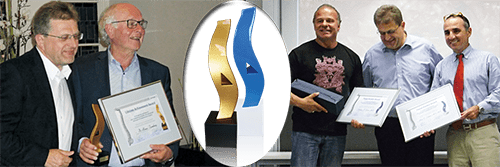
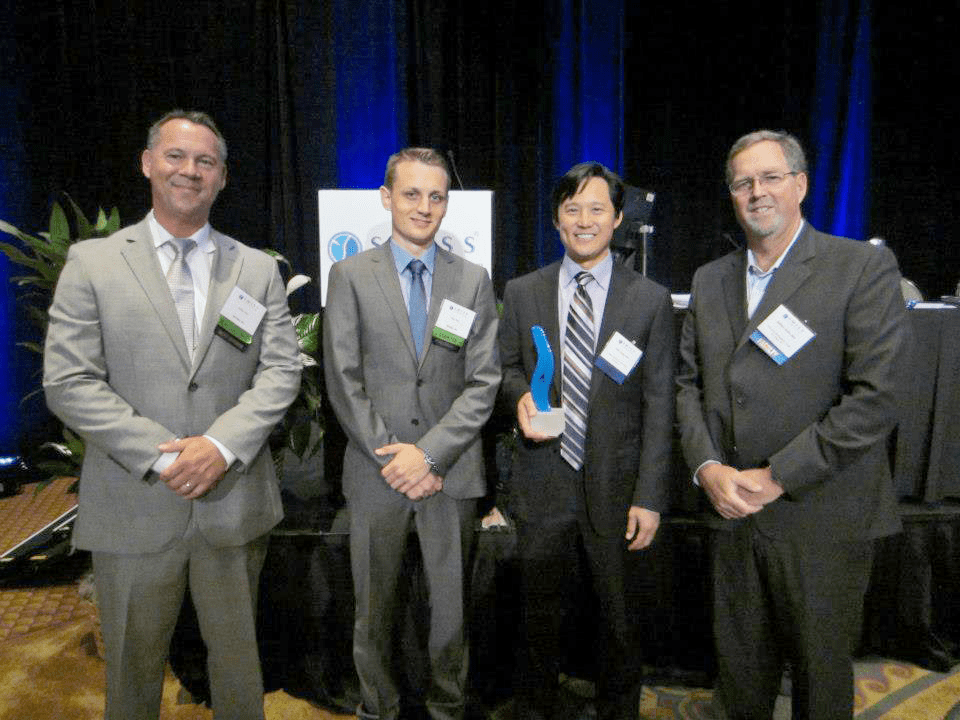
During the summit, the Parviz Kambin-Award was presented under the patronage of the PMU, ESPINEA and joimax® in recognition and honor of outstanding scientific and educational dedication to transforaminal surgery to Christoph P. Hofstetter (Seattle, WA, USA), Jian Shen (Amsterdam, NY, USA), Albert Telfeian (Providence, RI, USA) and Dinh Ngoc Son (Hanoi, Vietnam).

“I am thrilled about the Kambin Award, the most prestigious award in endoscopic spine surgery,” said Jian Shen.

Additionally, joimax® announced the recently founded and globally acting Endoscopic Spine Academy (ESPINEA). Backed by a scientific advisory board, ESPINEA offers professional and high-quality educational programs, specialty workshops and courses, and an opportunity to share knowledge and experiences. The goal of the academy is to elevate surgeons to the next level of expertise in endoscopic spinal treatment modalities.

The first two ESPINEA® Board Members are Dr. Menno Iprenburg, NL, longstanding endoscopic surgeon and twice Kambin Award recipient, and Kambin Award recipient Prof. Alastair Gibson, UK, whose been performing endoscopic spine surgery since 2005, using almost all system applications.

The Spine Movement – May 2012

Choll Kim, MD, PhD gives a breakdown of some of the most exciting presentations in MIS at ISASS12, and looks ahead to ISASS13 in Vancouver.

Minimally Invasive Surgery Was Huge at ISASS12

ISASS12 in Barcelona was a remarkable venue for numerous presentations related to minimally invasive spine surgery. Great interest both in the US and abroad continues to grow in this area of spine surgery: MIS made up the content for one-third of all the general sessions, with a sprinkling of individual presentations in other general sessions.

The range and complexity of the MIS topics proved broad. One of the most striking findings emerging in the literature is the marked decrease in infections when minimally invasive surgery is performed. Pfandistiener et al. from the Clinic for Spine Surgery with Scoliosis Center in Germany reported on infection rates between open and MIS posterior instrumentation. In 284 open surgeries, deep infections were seen in 2.46%. In contrast, 199 patients underwent percutaneous posterior instrumentation procedures without a single infection.

The use of minimally invasive strategies to treat ever more complex conditions were highlighted. Phillips and co-workers presented the prospective, multi-center results of 107 adult degenerative scoliosis with 24 month follow-up. Excellent clinical results and a low complications were encountered in this this challenging group of patients with advanced age and co-morbidities. Anand showed similar results in 33 patients from a single site.

The fusion rates of minimally invasive interbody fusion remains high. As shown in a meta-analysis by Gwinn et al. from Walter Reed Medical Center, the MIS TLIF technique enjoys a greater than 95% fusion rate.

Topics in endoscopic surgery continue to generate interest, as well–Nagahama et al. (Hokkaido University) and Schubert (Munich, Germany) showed continued success of this promising procedure in the hands of experienced endoscopic spinal surgeons.

Lingering questions regarding MIS were also addressed: Lee et al. (University of California, San Diego) quantitatively examined hip flexion strength after the popular transpsoas lateral lumbar interbody fusion (XLIF/DLIF/LLIF). As experienced by many surgeons, hip flexion strength decreased in most patients immediately postoperation, but returned to baseline within 2 weeks of surgery.

Cost effectiveness of open versus MIS TLIF was assessed by Phillips et al. on worker’s compensation patients; the cost of overall inpatient care was slightly less for MIS than for open.

Pimenta et al. advised appropriate caution when he described low fusion success rates of 2-level AxiaLIF procedures. In their review of 27 patients undergoing L4-S1 2-level AxiaLIF, only 22% of patients were considered to have solid fusion at 2 year follow-up.

Emerging MIS technologies were presented by a wide variety of groups. Regev et al. from Tel Aviv Sourasky Medical Center described the minimally invasive transforaminal, thoracic microscopic discectomy; Husain et al. from Loma Linda University described a percutaneous cervical transfacet fixation technique; Araghi et al. showed the results of the first 40 Guyer Lumbar Interbody Fusion (GLIF) procedures; MacMillan described a novel all transosseous approach to the L5-S1 disc, and both Julien (West Virginia University) and Sharma et al. (Manassas, VA) described the use of percutaneous stabilization for thoracolumbar fractures. It is heartening to see so many attempts to make the best of minimally invasive technology in this still pioneering area of spine surgery.

Santos et al. (University of Minnesota) showed that 3-D navigation may be used to improve safety and accuracy of percutaneous pedicle screw placement. Finally, the potential changes in healthcare delivery were highlighted by Smith and Christian (Las Vegas, NV) when they showed that selected MIS fusions may be performed in the ambulatory setting.

The diversity of topics was matched only by the excitement surrounding them. I’m looking forward to even more fascinating research by my colleagues at ISASS13 in Vancouver.

Choll Kim, MD, PhD
Spine Institute of San Diego

Eurospine 2016: joimax® launches its new MultiZYTE® SI-Joint Endoscopic Therapy Set and its new Intracs® Intraoperative Navigation Tracking & Control System

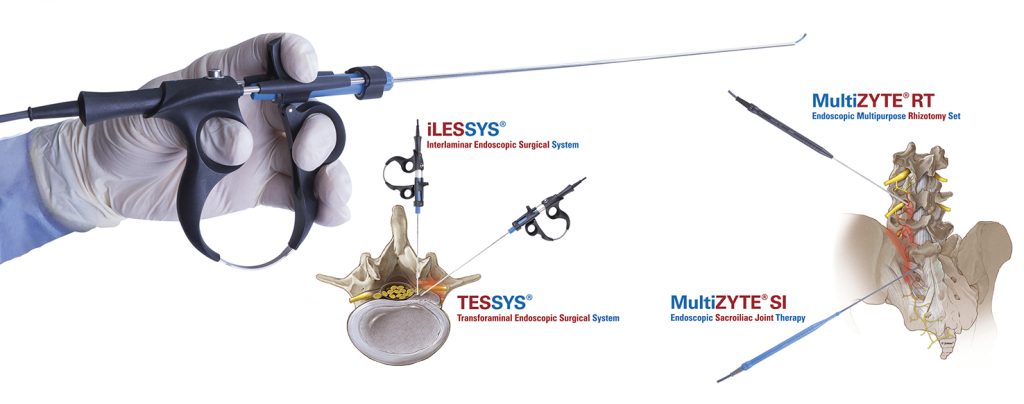
Karlsruhe – October 05, 2016 – joimax®, the global acting German developer and marketer of technologies and training methods for endoscopic minimally invasive spinal surgery, will again exhibit at Eurospine 2016 taking place from October 5 – 7 in Berlin. During the conference, joimax®will launch two new products – the MultiZYTE® SI Endoscopic Sacroiliac Joint Therapy Set and its new Intracs® Intraoperative Navigation Tracking & Control System.

MultiZYTE® SI Endoscopic Sacroiliac Joint Therapy is developed for the treatment of the Sacroiliac Joint Syndrome (SIJS), which has been rediscovered as a major back pain generator in recent years. This kind of pain is commonly felt in the lower back, the gluteal region, the hip and thigh and can even radiate into the leg and foot. Until the 1930s, SI-Joint was the main reason for low back pain, but since 1934 the focus has been on disc herniation. According to recent studies 15 to 25% of all low back pain is caused by the SI-Joint and up to 43% in patients having undergone lumbosacral fusion. MultiZYTE® SI joimax® now offers a well developed and lasting treatment option for this disease.

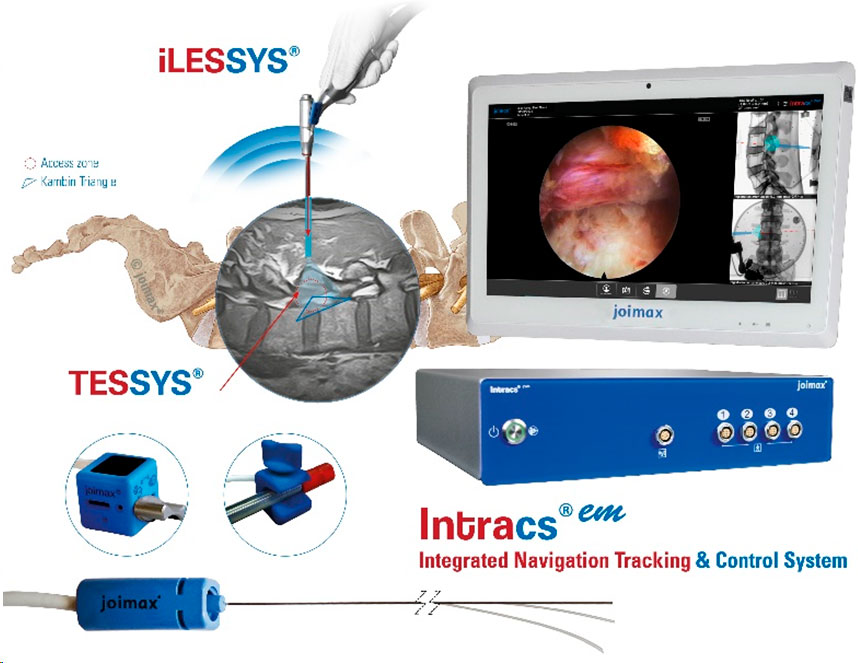
The Intracs® Intraoperative Navigation Tracking & Control System was developed in cooperation between joimax® GmbH Karlsruhe and fiagon GmbH in Berlin, both located in Germany. With the Intracs® system, joimax® instruments can be navigated directly at the tip using Fiagons “chip at the tip” technology which allows tracking of instruments with a diameter in the 1mm range. The Intracs ® Navigation and Monitor Unit is integrated in the joimax® Endoscopic Tower and all necessary tools are tailored for the TESSYS® (transforaminal) and iLESSYS® (interlaminar) procedures as well as for minimally invasive stabilization procedures, like EndoLIF® and Percusys®. The main features of the Intracs® system are needle navigation through Vector-Tip-Target processing tools, the merging of 2D X-Rays with 3D- images of a patient’s CT or MRI scans, and the constant orientation control of any endoscope used in joimax procedures.

“With these two new developments we are in the position to enhance our endoscopic minimally-invasive product portfolio, driving adoption rates to meet new heights. With the world unique Intracs® system, navigation is now faster, safer and more accurate than ever before using an electromagnetic (EM) field. Radiation exposure for both, patients and surgeons will be significantly reduced,” says Wolfgang Ries, CEO and founder of joimax®. “Additionally the learning curve for all spinal endoscopic procedures offered by joimax® will now be significantly reduced and the rapid expansion of all these techniques is now well layed-out,” he continues.

FDA Approves joimax® Intracs®em Electromagnetic Navigation System for Endoscopic Minimally Invasive Spine Surgery

IRVINE, CA – joimax®, the German-based market leader in technologies and training methods for full-endoscopic and minimally invasive spinal surgery, is pleased to announce that Intracs® em, its electromagnetic navigation tracking and control system, has been approved by the FDA.

The Intracs® em Navigation System allows for spinal procedures to be carried out with minimal X-ray control, drastically reducing radiation exposure, access time, and the entire length of the surgical procedure. In fact, all joimax® instruments and scopes can be tracked and accurately navigated through the appropriate sensors, which improves safety, expands endoscopic indications, and flattens the learning curve.

Intracs®em is a multiyear development. Its first cadaveric trials were made with a group of surgeons at the ESPINEA® Labs in Karlsruhe, Germany and Irvine, CA.

FDA Approval , joimax endoscopic navigation system Intracs em

According to Prof. Dr. med. Michael Kraus of ORTHIX Zentrum in Augsburg, Germany, who headed the preliminary trials: “Using Intracs® em Navigation System in the full endoscopic spine surgery is safe and easily applicable. The technology helps master precise access to the spine, and the clinical trials have confirmed the technique’s multiple advantages.”

Prof. Dr. Chris Hofstetter of UW Medical Center in Seattle, Washington, USA, adds: “joimax® Intracs®em constitutes a highly precise image-guided navigation platform designed for the specific needs of full-endoscopic spine surgery. Using electromagnetic navigation technology allows to track the leading edge of endoscopic instruments in real time, and facilitates needle targeting and orientation during the surgery, while minimizing radiation exposure. No doubt, this technology will expand the indications for full-endoscopic spine surgery and pave the way for innovations in minimally invasive arthrodesis techniques.”

joimax® is also excited to announce its second joint Global Symposium being held in partnership with Integrity Implants, Inc., August 21 – 22. For details, visit www.joimax.com.