joimax® and spine experts from across the world at COMINCO in São Paulo

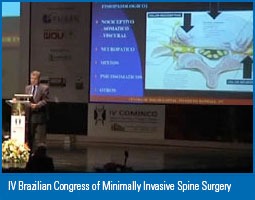
Karlsruhe – Spine experts from across the world met at the beginning of August at COMINCO (Brazilian Congress of Minimally Invasive Spine Surgery) in São Paulo. This was the fifth time that COMINCO has taken place and it provided an opportunity for large numbers of experts to share information and ideas in the fields of neurosurgery and orthopedics.

Minimally invasive treatment methods and their successes from the patient’s perspective were the focus of the congress. The very latest surgical possibilities and techniques were presented in symposia, workshops, and numerous lectures to a very high scientific standard. joimax® GmbH trainer, Dr. med. Ralf Wagner from Frankfurt, Germany, notably introduced TESSYS® in his presentation “Endoscopy of the lumbar spine in degenerative diseases.” This technique provides transforaminal access to the lumbar spine for treatment of herniated discs and stenosis – an osseous narrowing of the spinal canal.

Cominco

joimax® and Red One Medical Partner to Support Expert Endoscopic Minimally Invasive Spine Surgery for Veterans and Active Military

SAVANNAH, GA – joimax®, a leading developer and marketer of complete systems for endoscopic minimally invasive spinal surgery, and Red One Medical, a Service-Disabled Veteran-Owned Small Business, announced their partnership today. The partnership enables both companies to continue their missions to improve patient care and surgical outcomes with leading edge medical technology and devices.

Red One Medical Founder and CEO Charles Pollak shared, “I am excited to join forces with joimax® to offer their innovative technologies, systems and methods for endoscopic minimally invasive spinal surgery to VA and DoD facilities across the nation, further supporting the government’s goal to improve outcomes and improve efficiency in these facilities.”

Matt Cronin, senior VP of sales and marketing for joimax®, is a U.S. Navy veteran and hailed this partnership: “This is a pivotal moment for joimax® and our long history. We are honored to be a part of improving health care for our many veterans and our brave U.S. military personnel, as well as for their dependents. Our working together with Red One Medical will make endoscopic spine surgery more accessible to this patient population, where a quicker return to both duty and a more active life, is so important.”

About Red One Medical:

Red One Medical is a CVE-certified Service-Disabled Veteran-Owned Small Business (SDVOSB) located in Savannah, GA. Wholly owned and operated by a combat veteran, Red One Medical is a leading medical device distributor and wholesaler serving the Department of Veterans Affairs (VA) medical centers and Department of Defense (DoD) hospitals. Red One Medical donates a portion of profits to leading charities as part of its mission to support veterans, military families and their communities. To learn more, visit http://www.redonemedical.com/

RED-ONE-joimax-collaboration, Military, veterans, endoscopic spine experts, endoscopic devices, endoscopic systems, treatment

joimax® goes BRIC and beyond

OLYMPUS DIGITAL CAMERA

Right on time with the soon expected registrations of the joimax® products in Brazil – one of the most emerging BRIC economies – the German-based company showed a very successful presence at the third World Congress of Minimally Invasive Spine Surgery and Techniques (WCMISST) in Salvador de Bahia. The congress was supported by the main International MISS Societies. Almost 2.000 interested participants attended the congress which focused especially on promoting and enhancing the interventional minimally invasive treatment of spine diseases. joimax® is very proud of being part of this exciting development.

The eight largest emerging and developing economies by either nominal GDP or PPP are the BRIC nations (Brazil, Russia, India and China) as well as Mexico, Turkey, Indonesia, and South Korea. joimax® is represented in more than 60% of these countries – namely China, Russia, India, South Korea, and Turkey – and observes a fast growing number of registered products in these areas. In Brazil and Mexico submissions with the Health Authorities were started several months ago. The completion is expected in the near future. Then nearly 90% of the growth-leading economies will be covered.

joimax® provides the complete range of high-quality medical devices for minimally invasive endoscopic spine surgery “Made in Germany”. As a matter of course these devices are CE-marked and FDA-cleared and are sold throughout the European Union and the United States. The specific surgery methods they are used for, were developed by joimax® together with international experts and opinion leaders for the benefit of the patients:

Less pain, less trauma, less hospitalization, gain back quality of life and be back to work in shorter time!

The advantages are evident. Therefore joimax® has established a worldwide net of distribution partners allowing that as many patients as possible can get access to these progressive therapy methods.

Other important countries where joimax® is already present are: South Africa, Israel and Australia. One of the company’s goals within the next few years is to achieve the approval for its devices with the Japanese Ministry of Health.

Emerging and growth-leading economies are the key markets that are expected to lead global growth in the next 10 years. “joimax® is most pleased with its growing market penetration also in these countries, hence promoting these gentle, patient-friendly and economically beneficial surgery methods for the sake of the patients and of the health insurance systems at the same time”, states Wolfgang Ries, CEO and Founder of joimax®.

joimax launches the iLESSYS® Delta system for treatment of spinal stenosis at DGNC 2015 annual meeting

Karlsruhe, Germany – June 8, 2015 (BUSINESS WIRE) – The German company joimax®, developer of technologies and training methods for minimally invasive endoscopic spinal surgery, today announced it will introduce the company’s new iLESSYS® Delta system to the market at the 66th Annual Meeting of the German Society of Neurosurgery (DGNC) taking place in Karlsruhe, Germany from June 7-10.

iLESSYS® Delta, an advanced development of the joimax iLESSYS® technology, is suitable for dorsal and dorso lateral treatment of central spinal canal stenosis. The iLESSYS® Delta system enables a large area to be decompressed by means of the interlaminar access, guided by endoscopic-assisted vision.

“Since the access to the spine is the same as with the already well-established iLESSYS® technique, usage is very straightforward.” said Dr. Guntram Krzok, orthopedic surgeon from Waltershausen, Germany after testing the new system at a joimax workshop early this year. “I was impressed by the new scope which delivers outstanding image quality. With the specialized instrument set, it is finally possible to achieve decompression of central spinal canal stenosis.”

The iLESSYS® Delta instrument set includes specially developed tools that enable extensive, yet gentle, tissue-sparing decompression. The 6 mm working channel of the new endoscope allows for the use of large shaver blades designed for bone resection and endo-kerrisons. An additional option is the plastic (PPSU) working tube for unimpaired X-ray examination.

“iLESSYS® Delta is a logical addition to our portfolio. Not only is the system suitable for endoscopic decompression, but it also allows the parallel implantation of cages. This way we can achieve dorsal decompression and stabilization in one step,” comments Wolfgang Ries, CEO and founder of joimax.

About joimax

Founded in Karlsruhe, Germany, in 2001, joimax® is one of the leading medical device companies in minimally invasive spinal surgery („joined minimal access“). The company’s U.S. subsidiary was established in Irvine, California, in 2005. The company is primarily focused on the development, production and marketing of technologies and methods for minimally invasive endoscopic spinal surgery. joimax is active in 40 countries around the globe and its methods have been successfully employed in approximately 130,000 surgeries. With a special focus on education, the company provides surgeons with specialized technique training through the three-step joimax CM3 education program. This program includes visitations, cadaver workshops and live-surgery support.

joimax® conducts an international Live Spinal Surgery Workshop in cooperation with the Medical University of Graz, Austria

Spine specialists take part at the joimax® endoscopy workshop with live spinal surgeries

Karlsruhe, 14 March 2011: On 17 and 18 March 2011, the Medical University as well as the Institute for Anatomy in Graz, Austria, were the sites of a two-day international joimax® Workshop focused on the endoscopic resection of herniated discs utilizing the TESSYS® method. The first day, Dr. Wolfgang Kreil and Univ. Doz. Dr. med. Sandro Eustacchio of the Medical University Graz will operate on two patients with herniated discs using the TESSYS® method. The participating orthopaedic surgeons and neurosurgeons from Germany, Austria, Greece, Bulgary, Italy and Macedonia will experience the surgery procedure firsthand. While operating on the patients, one of the operating surgeons will explain each step of the TESSYS® surgery and answer questions of the workshop attendees. Afterwards Dr. Wolfgang Kreil and Dr. Sandro Eustacchio will lead scientific presentations and panel discussions on how the transforaminal endoscopic technique works and what their experiences have been, while discussing several case examples.

On the second day, joimax® hosts an intensive cadaver training course at the Institute for Anatomy Graz. The practical training and hands-on learning experience gained at cadaver workshops such as this one is an important first step in the three-step joimax® CM3 Education Program. In this comprehensive program, experienced surgeons and application specialists train each workshop member to use the TESSYS® Method. The subsequent steps of the Education Program are visitations, followed by live surgeries accompanied by joimax® Medical Trainers and application specialists.

joimax® Experiences Major Growth, Launches TESSYS® TransSAP Endoscopic Surgical System

KARLSRUHE, Germany – (BUSINESS WIRE) – joimax® is continuing its year-over-year double digit growth. Over the past 9 months, joimax® has grown more than 25% globally and in the United States alone, more than 35%. Among this major spurt, the market leader in technologies and training methods for full-endoscopic and minimally invasive spinal surgery is launching a new endoscopic surgical system, TESSYS® TransSAP.

“This allows for more extensive foraminal decompression and provides an optimal basis for transforaminal endoscopic fusion”

The company attributes strong growth to their popular workshop and educational program, which is now offered worldwide under the ESPINEA® training academy. To keep momentum, joimax® is releasing the TESSYS® TransSAP — the fourth addition to the TESSYS® family encompassing the standard TESSYS® Std, TESSYS® XT featuring longer reach instruments, and TESSYS® Thx, the optimized version for the thoracic spine.

The system is based on the proven TESSYS® method introduced in 2004. Since then, the technology has been enhanced and can be used for more complex indications, widening the spectrum of disease and vertebral level applications.

joimax® faculty surgeon masters, Dr. Christof Hofstetter and Dr. Ralf Wagner, demonstrate TESSYS® and iLESSYS® to an at capacity crowd during NASS 2022 in Chicago. (Photo: Business Wire)

“The TransSAP method follows an adopted access path to the spine, directly targeting the Superior Articulating Process,” says Dr. Christoph Hofstetter, associate professor in the Department of Neurological Surgery at the University of Washington. “This allows for more extensive foraminal decompression and provides an optimal basis for transforaminal endoscopic fusion,” adds Dr. Ralf Wagner, a longstanding joimax® ESPINEA® Faculty orthopedic surgeon based in Frankfurt.

In addition, joimax® provides a series of implants for fusion indications, such as the percutaneous pedicle screw system, Percusys® Plus, and a family of 3D-printed titanium cages within the EndoLIF® program. The EndoLIF® suite of products consists of the static implants O/On-Cage, Delta-Cage and DoubleWedge-Cage. “There are plans to add a new fully-expandable cage, as well as a navigated solution for endoscopic disc preparation and implant positioning to provide a full endoscopic assisted fusion platform,” says Wolfgang Ries, CEO and founder of joimax®.

All joimax® implants can be safely inserted using the “Over-the-Wire” technique for precise implantation, making them ideal for endoscopically-assisted fusion procedures established and protected by joimax®.

These new products have been exhibited at the following trade shows: SMISS in Las Vegas, CNS in San Francisco, and NASS in Chicago, and will be featured at EUROSPINE in Milan and at the German Spine Congress, DWG, in Berlin later this year.

A prime example of collaboration between China and Germany

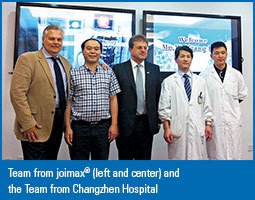
Karlsruhe – joimax® opens the 3rd Training and Reference Center in Shanghai, China, at Changzheng Hospital, Tongji University, under the direction of Prof. Ye Xiaojian. The prestigious university and its affiliated Tung-Chee Hospital were founded in 1907 by the German government as its first major project in foreign cultural policy.

It is a prime example of Sino-German collaboration, which continues to this day at Tongji University and also at other centers in Chongqing at Xinqiao Hospital under the direction of Prof. Zhou Yue, and in Beijing at the General Hospital of the People’s Liberation Army (PLAGH) under the direction of Prof. Zhang Xifeng. The Training & Reference Centers provide targeted training to surgeons in endoscopic treatment methods on the spine as part of the joimax® Education Program. Above all, this features TESSYS®, the technique of transforaminal access to the lumbar spine for treatment of herniated discs and stenosis – an osseous narrowing of the spinal canal. Qualified and standardized training in these surgical techniques is essential. joimax® is therefore supporting the basic principle that patients should always receive high quality, reliable, and safe therapy in line with the very latest technology and scientific progress.

Zusammenarbeit_China_EN

joimax® Showcases New Electromagnetic Navigation System Intracs® em at Global Spine Congress (GSC), Toronto and at German Society of Neurosurgery (DGNC), Wurzburg Clinical Trials Start in Europe and Asia

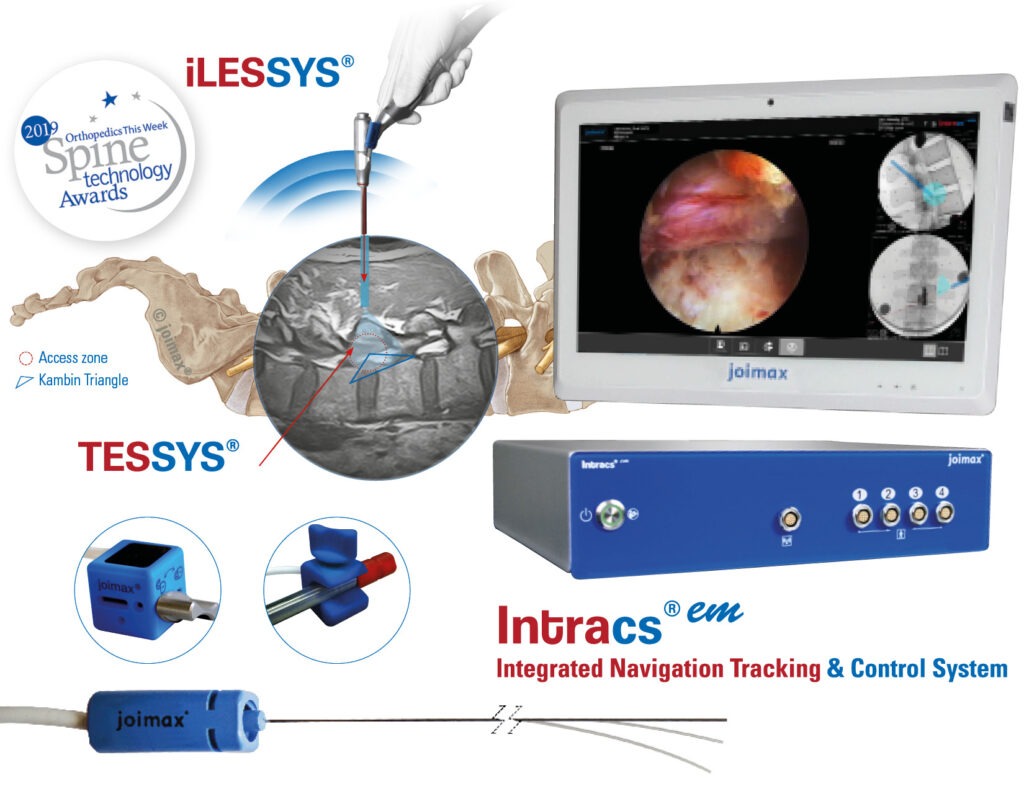
IRVINE, CA – May 13, 2019 – joimax®,, the Germany-based market leader of technologies and training methods for full-endoscopic, minimally-invasive spinal surgery, is showcasing its Integrated Navigation Tracking & Control System, Intracs®em, at this year’s Global Spine Congress (GSC), which is currently being held in Toronto, Canada. The company is also promoting the system at the annual meeting of the German Society of Neurosurgery (DGNC), being held concurrently in Wurzburg, Germany.

The Intracs®em electromagnetic navigation system is simple to set up, very user-friendly, and seamlessly integrates into the joimax® endoscopic tower. It allows for navigation during any endoscopic procedure performed with the joimax® endoscopic surgical systems, TESSYS® (transforaminal) and iLESSYS® (interlaminar). Beyond that, it can serve as a stand-alone device.

The system relies on electromagnetic tracking, affording simultaneous navigation of multiple instruments such as needles, guiding rods, reamers and endoscopes. It was developed by joimax®  for easy planning of endoscopic approaches to the spine, as well as other minimally invasive procedures, like percutaneous fusions.

Various Intracs®em sensors guarantee the highest accuracy. Plus, for the patients’ benefit, the procedure can be carried out without further X-ray control – only starting X-rays are required. As a result, access, intervention time, and radiation exposure, are reduced to a minimum.

The system is CE-Marked. Currently, clinical trials and applications are running in Europe and Asia, where the product has already launched. In specific Asian countries, like Taiwan, the first systems have been sold and shipped.

Users are very impressed with the usability of the system. “I didn’t expect that navigation for both transforaminal and interlaminar procedures can be made so easy and that the set-up time can be so much streamlined,“ states Prof. Michael Kraus, spine specialist in Augsburg, Germany.  “And for the thoracic approach, it is so precise and a tremendous help,” continues Dr. Erik Traupe, spine specialist in Munich, Germany.

The launch of Intracs®em is a key milestone for joimax®. As part of its global strategy, joimax®  is providing surgeons, worldwide, with the devices they need for safe, easy and gentle spinal therapies, with US-FDA submission planned for Q2, 2019. “We are committed to overcoming any obstacles and concerns related to minimally invasive, endoscopic spine surgery,” states joimax® CEO and Founder Wolfgang Ries. “Our success lies with our innovative, user-friendly devices and instruments, and our ability to provide both doctor and patient with outstanding safety built into our systems.” Moreover, a well established and targeted clinical training program for the spinal surgical community, named CM3, rounds out the joimax® educational offering. Earlier this year, joimax® launched ESPINEA®, an Endoscopic Spine Academy focused on a complete endoscopic spine curriculum. Designed as a full training program to elevate surgeons to the next level of expertise, ESPINEA® offers professional and high-quality education for endoscopic spine treatment specialists, worldwide. The ESPINEA® Training and Education Centers are located in Karlsruhe, Germany in the newly opened joimax® building, and in Irvine, CA, where joimax® opened new labs and training rooms last November.

The Spine Movement – May 2012

Choll Kim, MD, PhD gives a breakdown of some of the most exciting presentations in MIS at ISASS12, and looks ahead to ISASS13 in Vancouver.

Minimally Invasive Surgery Was Huge at ISASS12

ISASS12 in Barcelona was a remarkable venue for numerous presentations related to minimally invasive spine surgery. Great interest both in the US and abroad continues to grow in this area of spine surgery: MIS made up the content for one-third of all the general sessions, with a sprinkling of individual presentations in other general sessions.

The range and complexity of the MIS topics proved broad. One of the most striking findings emerging in the literature is the marked decrease in infections when minimally invasive surgery is performed. Pfandistiener et al. from the Clinic for Spine Surgery with Scoliosis Center in Germany reported on infection rates between open and MIS posterior instrumentation. In 284 open surgeries, deep infections were seen in 2.46%. In contrast, 199 patients underwent percutaneous posterior instrumentation procedures without a single infection.

The use of minimally invasive strategies to treat ever more complex conditions were highlighted. Phillips and co-workers presented the prospective, multi-center results of 107 adult degenerative scoliosis with 24 month follow-up. Excellent clinical results and a low complications were encountered in this this challenging group of patients with advanced age and co-morbidities. Anand showed similar results in 33 patients from a single site.

The fusion rates of minimally invasive interbody fusion remains high. As shown in a meta-analysis by Gwinn et al. from Walter Reed Medical Center, the MIS TLIF technique enjoys a greater than 95% fusion rate.

Topics in endoscopic surgery continue to generate interest, as well–Nagahama et al. (Hokkaido University) and Schubert (Munich, Germany) showed continued success of this promising procedure in the hands of experienced endoscopic spinal surgeons.

Lingering questions regarding MIS were also addressed: Lee et al. (University of California, San Diego) quantitatively examined hip flexion strength after the popular transpsoas lateral lumbar interbody fusion (XLIF/DLIF/LLIF). As experienced by many surgeons, hip flexion strength decreased in most patients immediately postoperation, but returned to baseline within 2 weeks of surgery.

Cost effectiveness of open versus MIS TLIF was assessed by Phillips et al. on worker’s compensation patients; the cost of overall inpatient care was slightly less for MIS than for open.

Pimenta et al. advised appropriate caution when he described low fusion success rates of 2-level AxiaLIF procedures. In their review of 27 patients undergoing L4-S1 2-level AxiaLIF, only 22% of patients were considered to have solid fusion at 2 year follow-up.

Emerging MIS technologies were presented by a wide variety of groups. Regev et al. from Tel Aviv Sourasky Medical Center described the minimally invasive transforaminal, thoracic microscopic discectomy; Husain et al. from Loma Linda University described a percutaneous cervical transfacet fixation technique; Araghi et al. showed the results of the first 40 Guyer Lumbar Interbody Fusion (GLIF) procedures; MacMillan described a novel all transosseous approach to the L5-S1 disc, and both Julien (West Virginia University) and Sharma et al. (Manassas, VA) described the use of percutaneous stabilization for thoracolumbar fractures. It is heartening to see so many attempts to make the best of minimally invasive technology in this still pioneering area of spine surgery.

Santos et al. (University of Minnesota) showed that 3-D navigation may be used to improve safety and accuracy of percutaneous pedicle screw placement. Finally, the potential changes in healthcare delivery were highlighted by Smith and Christian (Las Vegas, NV) when they showed that selected MIS fusions may be performed in the ambulatory setting.

The diversity of topics was matched only by the excitement surrounding them. I’m looking forward to even more fascinating research by my colleagues at ISASS13 in Vancouver.

Choll Kim, MD, PhD
Spine Institute of San Diego
joimax® faculty member Dr. Albert Telfeian performs 1st endoscopic removal of a thoracic spinal tumor

We are proud to share this story about our joimax® faculty member Dr. Albert Telfeian and how he was able to help 17-year old Jenelle “Nelly” Camara who was suffering from a spinal tumor.

Already in 2014, Dr. Telfeian removed a thumb-sized tumor pressing the girl’s spine cord. The pathology was sent for identification but even the best U.S. labs weren’t able to figure out what the tumor was. Camara underwent radiation therapy and was free of symptoms for a while. But the tumor resumed growth soon and she and her family returned to Dr. Telfeian at Hasbro Children’s Hospital in Providence.

This time the surgeon decided to use an endoscopic approach with the girl under local anaesthetic. With Camara being awake during surgery, Dr. Telfeian was able to ask her to move her legs which is an important control for the surgeon operating in such close proximity to the spinal cord. With a tiny 8-millimeter incision on her back and specialized endoscopic instruments he was able to do a biopsy on the tumor without removing bony material like in the first surgery.

Within a week the family received a diagnosis which now allows a targeted therapy for Camara who will be able to return to school and cheerleading in fall this year.
Read all the details about how endoscopy helped to identify Camara’s tumor in this article.

NBC also featured the story in NBC 10 News. 

A scientific paper (case report) about the procedure was published online in the journal, Clinical Neurology and Neurosurgery, and will appear in the July 2015 issue.